
 by
by Last Updated on 02/10/2026 by Claire Coney
Travelling with a dog in the car has become one of my favourite parts of any adventure. Long before we even reached the front door, the sound of car keys was enough to send Abigail and Charlie into excited zoomies — tails wagging, paws tapping, ready for whatever came next.
Over the years, we’ve explored peaceful countryside lanes, taken family holidays, and wandered through new places together, learning what truly makes car travel safe, calm, and enjoyable for dogs and humans alike. Together, we’ve travelled everywhere from peaceful countryside walks to family holidays, learning plenty along the way.
From Abigail’s first campervan ride to Charlie’s puppy‑crate days, every journey has taught us something useful. In this guide, I’m sharing the practical tips, simple routines, and little lessons that have made our road trips smoother — so you and your dog can enjoy the adventure just as much as we do.

Before we get into the essentials of travelling with your dog, make sure you grab my Free Dog Travel Checklist. It’s a simple way to make sure you’ve packed all the essentials, checked your dog’s travel gear, and haven’t forgotten those easy-to-miss items that can make all the difference. Download your copy before you set off, then come back and let’s look at everything you need to know for safe and stress-free travel with your dog.
Affiliate Disclosure: If you shop through our affiliate links, I may earn a small commission at no extra cost to you. This helps me keep The Fido Trail going so I can share more dog-friendly travel tips, guides, and adventures with Charlie, Ellie, Murphy and Archie. Thank you for supporting The Fido Trail!
Why Planning Your Journey With Your Dog Matters
- A well-planned trip allows you to focus on making memories instead of dealing with avoidable problems.
- Investing in quality travel gear protects your dog while giving you peace of mind throughout your journey.
- Careful preparation helps ensure every trip is safe, comfortable, and enjoyable, whether you’re heading out for a day trip or a cross-country adventure.
Travelling with a dog in the car is wonderful — but only when you’re prepared. A few simple steps can turn a stressful journey into a smooth adventure.
Preparing For Travelling with Your Dog in The Car
Preparing for travelling with your dog in the car starts long before you turn the key in the ignition. A little planning makes every journey calmer and safer, and it helps your dog feel confident about what’s ahead. Over the years, Abigail and Charlie have shown me that the smoother the preparation, the smoother the trip — whether we’re heading out for a quick countryside drive or a long campervan adventure. From health checks and ID tags to choosing the right restraint and packing the essentials, these simple steps set the tone for a relaxed, enjoyable journey for both you and your dog.
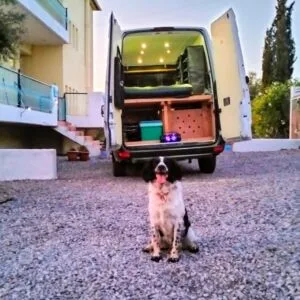
1. Visit Your Vet Before Travelling In The Car with a Dog
A quick vet check ensures your dog is healthy and ready for the journey. I always make sure vaccinations and microchips are up to date, and I bring medical records with me — especially important for Charlie, who has a condition that needs monitoring. If your dog struggles with motion sickness, this is also a good time to ask your vet about prevention or medication. Calming products can help too; Vet’s Best Comfort Calm Tablets work well for Abigail and Charlie on longer trips.
2. Update Your Dog’s ID Tags
Before any trip, I double‑check that Abigail and Charlie’s ID tags are current. If your dog were to get lost in unfamiliar surroundings, a clear tag with your address and phone number helps them get back to you quickly. Smart Pet Tags are another great option — they link to an online profile and send alerts if someone finds your dog.
3 Choosing The Right Restraint For Travelling With A Dog In The Car
Your dog’s safety should always come first. Depending on your dog’s needs, you can use a travel harness, crate, carrier, back seat hammock, or boot guard. The most important thing is preventing your dog from roaming freely in the car — it’s dangerous for both you and your dog. Charlie’s travel crate setup works perfectly for him, while Abigail prefers a harness and seatbelt clip. Choose what keeps your dog secure and comfortable. You can find out more about the travel crate set-up in my guide.
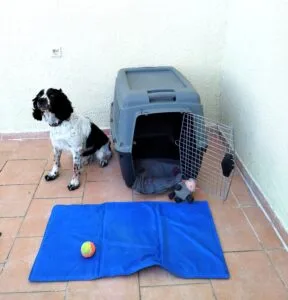
4 Pre-trip Training For Travelling With A Dog In The Car
Training is key to success when travelling with your dog in our vehicle!
When I first began taking Abigail and Charlie on car trips, I kept the journeys short and chose fun destinations like the beach, or woods, I closely observed their reactions to being in the car and gradually extended the duration of our travels. This approach has significantly reduced their travel anxiety and made our vehicle a familiar and safe space that both dogs enjoy.
When Charlie was a puppy, he was anxious about car travel. Short trips to the beach helped him learn that good things happen after the car ride — and now he jumps in happily.
If your dog isn’t used to long car rides, consider training to prepare them for the journey. Reward-based training can help them associate the car with positive experiences.
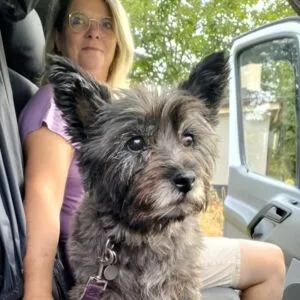
5. Quick Packing Checklist For Travelling With A Dog In The Car
I write a checklist of everything I need when travelling with Abigail and Charlie in the car. Here are some essential items I take:
- Food, water, and bowls
- Medication, health records, and immunisation documents
- Plenty of poop bags and a poop bag holder
- A doggy first aid kit for emergencies
- Favourite toys
- A blanket and bed to provide them with a sense of security
- Leash and collar or harness for walks
- A crate or carrier for travel and a safe space
- Grooming supplies like brushes and nail clippers
- Treats for positive reinforcement
- Identification tags with your contact information
- Cooling vest or sweater, depending on the climate and your dog’s needs
6. Planning Your Route with Your Dog in Mind
When planning a road trip with your furry friend, it’s essential to consider their needs.
I use websites like BringFido as they have an extensive directory of pet-friendly places. It includes hotels, restaurants, and dog parks. This will ensure a comfortable journey for both you and your pet.
Additionally, some rest stops have gone the extra mile to accommodate pets. They provide fenced dog parks and other amenities to make your travel experience more enjoyable. Always remember to check the pet policies of accommodations in advance to ensure a smooth and stress-free trip.
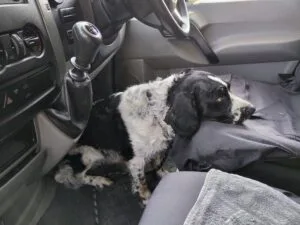
During The Car Trip With Your Dog
Keeping Abigail and Charlie comfortable during car travel is crucial for a smooth journey. Here are some tips to ensure your four-legged friend stays relaxed.
Don’t Leave Your Dog In The Car When It’s Hot!
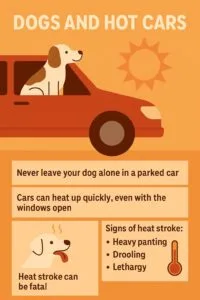
Never leave your dog in the car alone in the heat. The rate at which a vehicle can heat up is alarming. If it is sunny and the temperature outside is 24 °C, within 10 minutes it can reach 38 °C inside the car. Within 30 minutes, it will be approaching 50 °C.
If you leave Fido in that sort of heat, it will gradually increase his core temperature. Dogs cannot sweat and are unable to cool themselves down quickly enough by panting alone.
Once Fido’s core temperature reaches 41.5 °C, his cells will start to break down. Then the enzymes will be destroyed.
Remember, dogs die in hot cars! Besides, passers-by may break the window to release the trapped dog to end his suffering.
Warm Weather Tips for Travelling with Your Dog in the Car
During holidays, there may be times when it’s necessary to travel with our dogs in warm weather. My husband, Austin, and I typically choose to travel early in the morning, late in the evening, or overnight. These times are generally cooler, making it more comfortable for our dogs, and we also avoid traffic jams!
When we take breaks, either Austin or I will stay in the car with Abigail and Charlie. We park in the shade and open the windows to let in some fresh air. Alternatively, we turn on the air conditioning to keep them cool. Additionally, Abigail and Charlie use cool mats and always have plenty of water to stay hydrated.
Cool the Car Before Your Dog Gets In
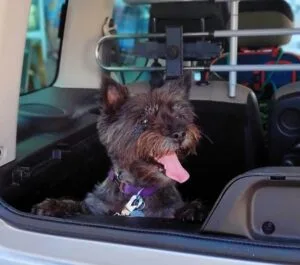
On warm days, I always cool the car down before letting Abigail and Charlie jump in. Charlie in particular struggles with heat, so I run the air‑conditioning for a few minutes or open all the doors to let the hot air escape. Starting the journey in a cool car helps them settle immediately.
Use Sunshades to Block Direct Sunlight
Sunshades are a lifesaver when the sun is blazing. They help keep the back seats cooler and stop the sun from shining directly onto Abigail’s harness or Charlie’s crate. It’s a simple change that makes the whole space more comfortable.
Offer Water Regularly
Both dogs drink more in warm weather, so I bring a spill‑proof bowl and offer water at every stop. If it’s particularly hot, I’ll place a cooling mat or a damp towel in Charlie’s crate to help him stay comfortable. I also used a water spray bottle to cool them down.
Avoid Travelling During Peak Heat
Whenever possible, I plan our journeys for early morning or late afternoon. Midday heat can make the car uncomfortable even with air‑conditioning, and Charlie is much happier travelling when the sun isn’t at its strongest.
Never Leave Your Dog Alone in the Car
Even with windows cracked, a parked car heats up dangerously fast. If I need to stop, both dogs come with me — no exceptions. It’s simply not worth the risk.
Cooling Gear Helps
Cooling vests, bandanas, and mats are great for warm‑weather travel. Abigail benefits from a cooling vest on hotter days, while Charlie prefers a cooling mat in his crate. Choose whatever suits your dog’s comfort level.

Don’t Let Your Dog Stick Their Head Out Of The Window!
Fido could knock his head against something if he had his head out of the window. It is also dangerous, as Fido might fall out of the window or distract other drivers.

Front Seat Rules
Avoid putting Dogs In The Front Seat Of The Car
Dogs can only travel on the front seat of the car if you switch off the passenger-side airbag. Also, move the seat as far back as possible. Airbags are good for humans, but can kill dogs. However, it is safer for your dog to travel in the back of the car. The dog is also less likely to distract you when you are driving.
Smooth Driving
Keep the Ride Smooth and Calm
Drive gently to ensure a smooth ride, avoiding sudden stops or sharp turns. Select well-paved routes and lower noise levels by turning off loud music.
Anxiety & Motion Sickness
To prevent motion sickness, it’s important to recognise the signs and take preventive measures.
Before a trip, I typically feed Abigail and Charlie a light meal three to four hours beforehand. Throughout the journey, I ensure they have plenty of water. I also keep them happy and comfortable by bringing along their favourite toy and blanket.
However, if you are concerned about this, then go to your vet, and they may be able to prescribe medication. Alternatively, try calming tablets. These work well and help Abigail and Charlie relax on long journeys.

Pro Tip for Positioning Your Dog In the Car: Dogs generally suffer less if they are facing forward when you are driving.
Breaks & Hydration
Stop Regularly When Travelling With Your Dog in The Car
When planning a journey with Abigail and Charlie in the car, I always allow plenty of time to stop along the way. They need breaks to stretch their legs, go to the bathroom, and have a drink. I typically stop every 2 to 3 hours.
I use a travel water bowl that can be flattened and stored easily. To prevent motion sickness, I only give Abigail and Charlie light snacks or treats during the trip.
It’s important to offer your dog water regularly throughout the journey to keep them hydrated.
Most service stations have a dog walking area, or you could break up your journey with a trip to the park. You could go out for a short walk or have lunch in a dog-friendly cafe along the way. This will also make the journey easier if you are travelling alone with your dog. Why not make your journey with Fido fun? It is part of your adventure after all.
Travelling with a Dog in the Car: Special Considerations
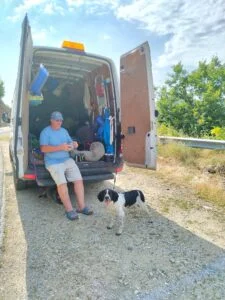
Every dog and journey is unique, and special situations require extra preparation when travelling with a dog in the car. Here are some important tips:
- Multiple Dogs: Ensure each dog has their own space in the vehicle, closely monitor their behaviour, and bring extra supplies to prevent conflicts and reduce stress. For instance, Charlie doesn’t like it when Abigail jumps on him to look out the window, so they need to have their own space.
- Puppies: Start with short trips to help them adjust. Use a crate for safety, pack chew toys to keep them occupied, and plan for frequent potty breaks. Charlie was anxious about car travel at first, but he soon got used to it when I took him on a short journey to the beach, and he knew there was something good at the end of it.
- Senior Dogs: Provide orthopaedic bedding for comfort, maintain their routines, bring any necessary medication, and limit long drives to reduce joint strain and fatigue.
- Long-Distance Travel: Research pet-friendly stops along your route. Maintain feeding and walking routines, and have emergency vet contact information readily available.
- Extreme Weather: Keep your dog comfortable in the heat by ensuring proper hydration and using climate control. In winter, provide warm clothing and blankets to keep them cosy.
With a little planning, you can navigate any special situation and ensure a safe, comfortable trip for your furry companion.

Legal Requirements for Travelling with Your Dog in the Car
When you’re travelling with your dog in the car, it’s important to understand the basic legal requirements. These rules are designed to keep both you and your dog safe — and they’re much simpler than they first appear.
Your Dog Must Be Properly Restrained
UK law requires dogs to be safely restrained in the car so they can’t distract the driver or injure themselves in an emergency stop. This comes directly from Highway Code Rule 57, which states that it’s the driver’s responsibility to make sure pets are secure .
A loose dog can cause an accident, and if that happens, you could be charged with driving without proper control, which carries a £1,000 fine and three points on your licence .
In simple terms:
Harness, crate, carrier, or boot guard — choose whichever keeps your dog safely in place.
Check Your Insurance
Some insurance providers require pets to be restrained while driving. It’s worth checking your policy so you’re fully covered in case of an accident .
Emergency Contacts
Keeping a list of emergency vets and your dog’s key information easily accessible in case of emergencies.
Many Owners Don’t Know the Rules
A Go Compare survey found that:
- 40% of pet owners don’t know the rules about driving with dogs
- 21% of dog owners admit they don’t secure their dog properly in the car
This shows how easy it is to overlook the legal side of dog travel — but you’re already ahead by checking.
Laws Change by Country or State
If you’re travelling outside the UK, pet travel laws vary widely. Some places require:
- specific restraints
- vaccination records
- import permits
- health certificates
This is especially important if you’re crossing borders, where rabies certificates or quarantine rules may apply .
Don’t miss my guide to travelling from the UK to Europe with your dog.
Quick Summary
To keep things simple, here’s what you need to remember:
- Restrain your dog — it’s the law and it keeps everyone safe
- Check your insurance — some policies require restraints
- Know the local rules — laws differ across countries and states
- Prepare documents if travelling internationally

Arriving at Your Dog-Friendly Destination
Fido will need time to get used to the new smells of the hotel, B&B, or campsite. Also, he will need plenty of naps throughout the holiday for relaxation.
Wrapping It Up
Travelling with your dog in the car should feel like the start of an adventure, not a stressful chore. With a bit of preparation and the right setup, every journey becomes calmer, safer, and full of those small moments we treasure — like Abigail’s happy tail thumps or Charlie’s eager nose pressed against the window. Once you understand what your dog needs to feel secure and comfortable, the whole experience changes for both of you.
If you’d like a simple way to stay organised for every trip — short drives, long road journeys, campervan holidays — I’ve put together a Free Dog Travel Checklist with all the essentials we use on the road. It’s the easiest way to make sure you’re fully prepared, and your dog stays happy wherever you’re heading next.
Download your free checklist and start planning your next adventure together.