
 by
Last Updated on 01/11/2026 by Claire Coney
Does your dog need a winter coat? It’s a question that many dog owners ask when the weather starts to get cold. If you’re unsure whether your pup needs a cosy jacket, I can help you. I have a multi-dog household, and each of them has different needs when it gets colder. I will share what I have learned with you.
What I’ve Seen With My Own Dogs.
Charlie isn’t bothered by the cold because he’s normally too busy charging about and finding something interesting to investigate. Murphy and Archie, with their thicker coats, tend to cope well in colder weather too. Ellie isn’t usually troubled by the cold itself, but she definitely has strong opinions about getting wet!

In this guide, I will provide some practical tips for choosing the perfect winter dog coat for your furry friend’s lifestyle. But there are more things to think about than just temperature! We’ll also consider other factors, including;
- their breed,
- size,
- age,
- health,
- activity level,
- the type of coat they have naturally.
How Can You Tell If Your Dog is Feeling Cold?
Observe your dog when you are on a chilly winter walk. Every dog shows discomfort differently. Look to see if they are happy or not.
- Shivering or trembling
- Reluctance to walk or slowing down
- Lifting or holding up paws
- Seeking warmth or shelter
- Wanting to go home
- Curling up into a tight ball to sleep
If you see any of these behaviours while walking your dog in cold winter weather, consider whether your dog needs a coat.
When I had Abigail, she would shiver and want to go home if she got cold on winter walks. But when she had her insulated winter dog coat on, she enjoyed sniffy walks even in the snow.

Breed and Coat Type
A dog’s fur is their natural protection against the cold, but not all coats are the same. Some dog breeds are more likely to need winter dog coats than others.
Which Dog Breeds Are More Likely to Need a Winter Dog Coat?
If your dog has a short coat with single-layered fur, they often lose body heat quickly when it is cold outdoors. Some examples of these breeds are;
- Greyhounds,
- Whippets,
- Chihuahuas,
- Smooth-haired Dachshunds,
- Yorkshire Terriers.
- Miniature Pinschers
Which Dog Breeds Don’t Usually Need a Winter Dog Coat?
Not every dog requires a coat, and a few may become too warm if they wear one. The following breeds have thick, double-layered fur that naturally keeps them warm in cold weather. Some examples of these breeds are;
- Huskies,
- Malamutes,
- Newfoundlands,
- Bernese Mountain Dogs,
- Border Collies
- Golden Retrievers
- German Shepherds
My two Greek Shepherds, Murphy and Archie, have thick double-layered coats, and they cope well in colder weather. But as we go on more adventures together, I plan to get them a lightweight, non-insulated waterproof jacket. On a rainy day, this will keep them comfortable. It’s not just about the temperature!
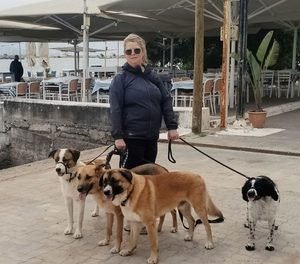
My dogs and I enjoying a winter walk. No dog coats needed.
Do Small Dogs Feel the Cold More Than Larger Dogs?
Yes, they can. Smaller or leaner dogs have less body fat, making it more challenging for them to stay warm. Whereas larger dogs have more body fat, which helps with heat retention. Therefore, small dogs are more likely to need a winter dog coat to stay warm and cosy when it is cold outside.
This was something I noticed with Abigail, my Cairn Terrier who is sadly missed. She taught me lots about caring for a dog in different weather conditions over the years; Abigail didn’t like getting wet or feeling cold. She enjoyed cuddling up next to a heater. She loved to be warm and cosy. Abigail was smaller and nearer to the ground, making her a less active dog than my other dogs. She needed different winter coats for different situations and activities. It helps her stay warm and comfortable all winter.

Every dog is different, and size is definitely something to consider when getting your dog a winter coat.
Do Puppies and Older Dogs Need a Winter Coat?
Young dogs usually have more energy and stamina than older dogs. This allows them to stay active even in cold weather. Puppies and dogs with health issues may also need extra protection from the cold because of lower energy levels.
When dogs get older, winter walks can become more challenging for them. Their joint can feel stiff in cold weather, particularly for dogs with arthritis or mobility issues.
Something I learned from Mr No Good when he was with us was that dogs’ needs change over time. In his younger years, he wasn’t bothered by the weather, but as he got older, his arthritis sometimes restricted his movement. I always used a winter dog coat to help keep him comfortable and warm during our outings.

Do Active Dogs Need Winter Coats?
Not all dogs generate heat the same way. If your dog is active, chasing around fields and sniffing scents, they generally keep themselves warmer than dogs that prefer a slower pace.
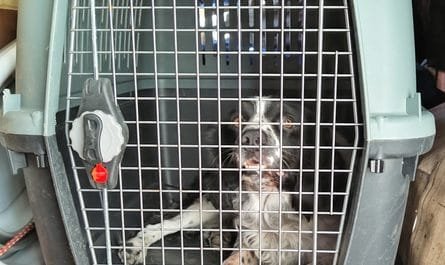
Charlie, my English Springer Spaniel, is a good example. He is lively and loves playing and creates his own warmth during a walk. Spaniels are bred for outdoor work in any weather. They have a thick coat that keeps them warm but makes them prone to getting too hot. If Charlie wears a coat, he tends to overheat.
Instead, I focus on his aftercare. I always dry him off with a micro-towel before he gets in our car to remove any water and dirt from his fur. He only needs a winter coat in extremely wet and cold weather.

When Staying Dry Matters More Than Staying Warm
People often think about using dog coats for warmth, but a coat can serve a purpose other than keeping warm. For some dogs, staying dry can be a bigger issue.
Ellie’s Story…
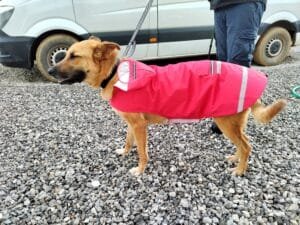
Ellie, our rescued German Shepherd, is a perfect example. She doesn’t mind the cold weather, but doesn’t like the rain, which triggers her fear and makes her shake and want to hide. We don’t know much about her life before she came to us, but we know she needs extra reassurance when she’s scared.
Her lightweight waterproof coat helps her stay calm when it rains. It has Velcro chest and belly strips that wrap around and comfort her. I’ve noticed this makes her feel more settled. It’s one of the little things I can do to help her feel more confident. Ellie’s come a long way since she came to join our family. Ellie has grown to trust us, and it’s lovely to watch her confidence grow day by day. We take things slowly, and at her pace, giving her lots of reassurance. We never force her to face something she’s frightened of.
For Ellie, she likes to keep dry, but feeling safe matters just as much.
At What Temperature Do Dogs Need a Winter Coat?
There’s no simple answer. It’s not just about numbers.
A healthy Husky and a Chihuahua can experience exactly the same weather very differently. Rather than focusing on a specific temperature, it’s more helpful to consider:
- Your dog’s breed
- Coat type
- Age
- Health
- Body condition
- Activity level
- Wind, rain and damp conditions
You should watch your dog, as they often tell us everything we need to know through their behaviour.
Can My Dog Wear a Coat Indoors?
In most cases, no. Central heating is enough to keep your dog warm. Take off the coat once you enter the house so they don’t overheat.

Final Thoughts: Does Your Dog Need A Winter Coat
Deciding if your dog needs a winter coat depends on their individual needs rather than a rulebook.
Some dogs are perfectly happy tackling colder weather with the coat nature gave them. Others are more comfortable with a winter dog coat.
Getting to know your dog will help you make the best decision for them.
And if you’ve decided your dog should have a coat, the next step is choosing one that fits your dog well. In my next post, How to Measure Your Dog for a Winter Coat, I’ll walk you through exactly how to measure your dog step-by-step so you can choose a style that is perfectly snug, comfortable, and safe for their adventures!
The best coat for your dog depends on its size, coat type, lifestyle, and the weather conditions during your usual walks. Some dogs only need a light, waterproof coat. Others might benefit from a warmer, insulated coat for the coldest days.
A good fit is also important. A coat should allow your dog to move freely without rubbing, restricting their movements, or dragging on the ground.
For more help, check out my guide on choosing the right winter coat for your dog, where I talk about the different types of coats, materials, and features to consider before buying.